

Summary - Continuous delivery is a process that helps growing software companies improve efficiency, reduce risk, and ship faster. Learn why continuous delivery works and six key benefits to adoption.
This is the first of three blog posts on continuous delivery. It's a process that helps growing software companies improve efficiency, reduce risk, and ship faster. This post explains why continuous delivery works and outlines six key benefits. Future posts will cover best practices for successful implementation and how to accelerate the process further.
Continuous delivery has become essential in software development over the past decade. It's a proven way to improve efficiency, reduce errors, and make product releases predictable and frequent.
At Klipfolio, we adopted continuous delivery nearly a decade ago and have seen remarkable results. We've gone from releasing software once a week to shipping multiple times daily—with higher quality, happier customers, and a more engaged team. We're sharing our continuous delivery story to help other growing companies understand its real-world impact.
What is continuous delivery?
Martin Fowler, a leading voice in software development, defines it this way: "Continuous delivery is a software development discipline where you build software in such a way that the software can be released to production at any time."
Jez Humble, co-author of the book Continuous Delivery, expands on this definition:
"Continuous delivery is the ability to get changes of all types—including new features, configuration changes, bug fixes, and experiments—into production, or into the hands of users, safely and quickly in a sustainable way. The goal is to make deployments—whether of a large-scale distributed system, a complex production environment, an embedded system, or an app—predictable, routine affairs that can be performed on demand."
At its core, continuous delivery is a collection of processes, tools, and culture used to deliver incremental value to customers. It means releasing software improvements—features and bug fixes—in smaller, manageable chunks rather than large, infrequent batches.
It's not just a technical practice for development teams. Continuous delivery is a philosophy that makes your entire organization more nimble and responsive. When you break product changes into smaller increments, you can release them quickly, gather feedback, and adjust course accordingly.
Our journey
When Klipfolio started its continuous delivery journey, we were releasing software once a week at most. The process was manual, and only one team member handled releases. Today, we ship to production almost daily, and any developer can execute a release.
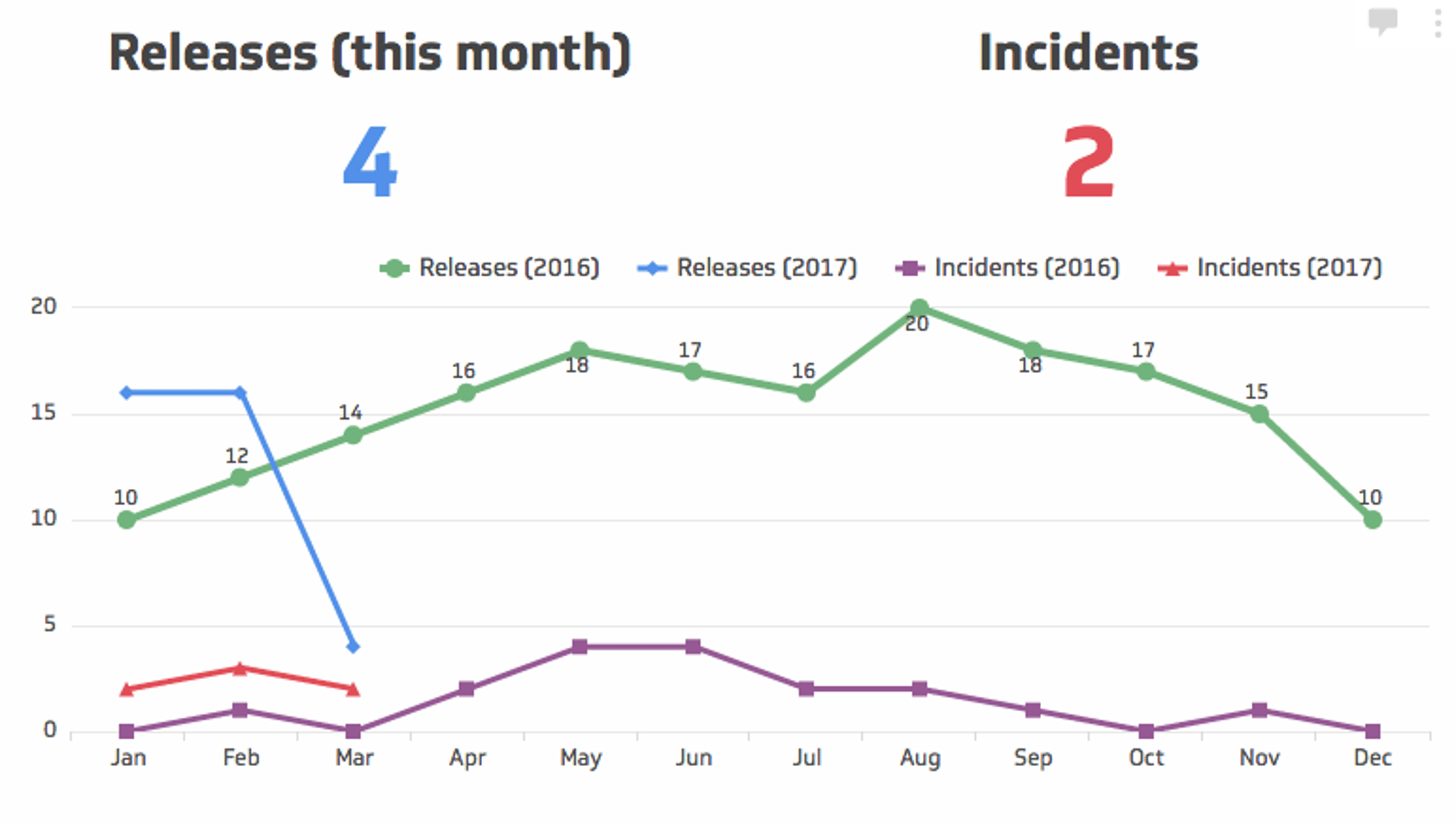
In 2016, we completed 183 releases. By 2017, we targeted 200+ releases annually—roughly one per working day. We tracked this progress using our own dashboard software, which gave us real-time visibility into our deployment cadence.
What are the benefits of continuous delivery?
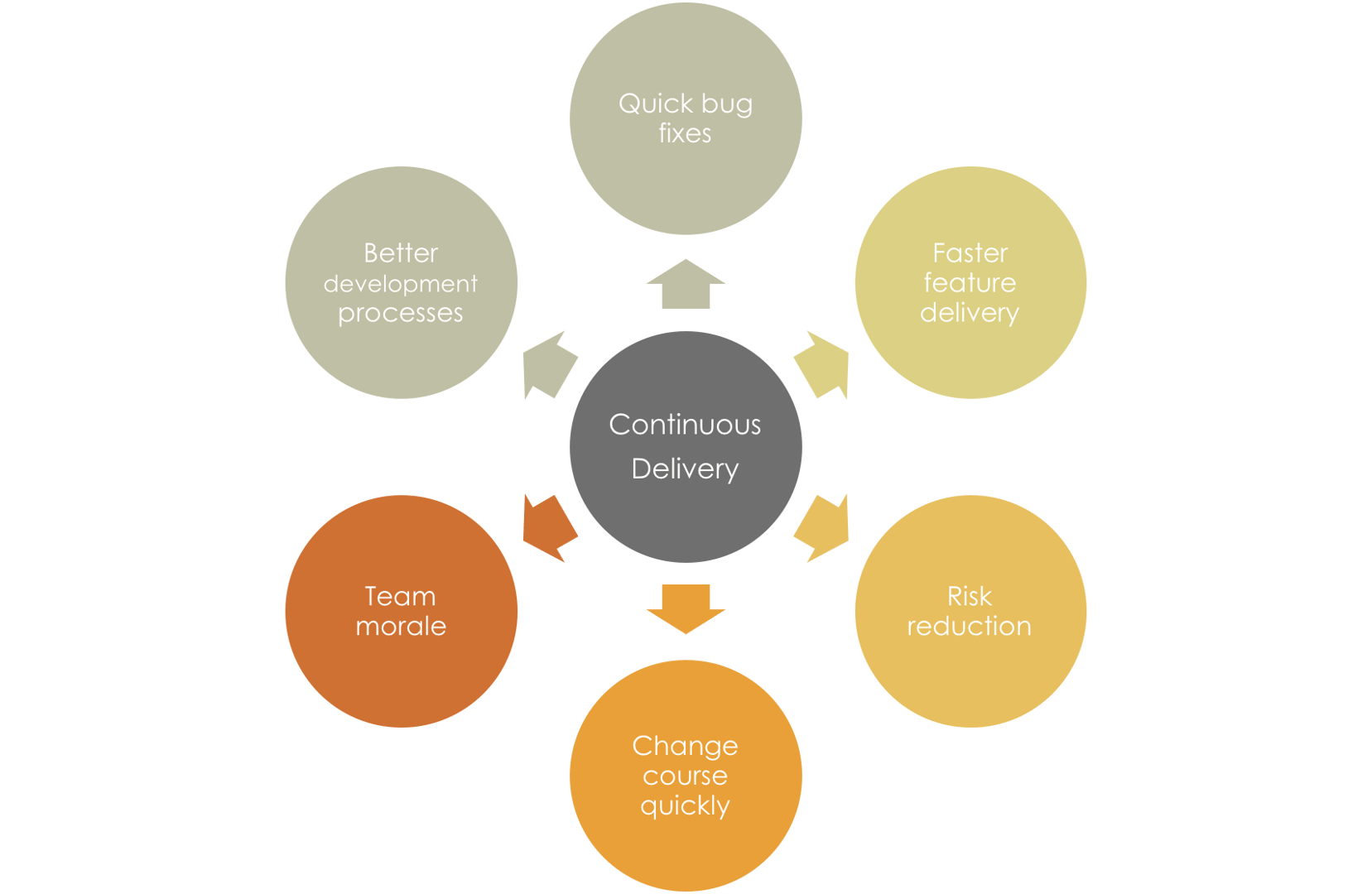
Despite releasing around 200 times per year, our releases are more reliable, our customers are happier, and our team is stronger. Here's why continuous delivery delivers measurable benefits:
- Problems are fixed more quickly. Faster feedback loops mean faster fixes.
- New features reach customers faster. Smaller releases reduce time-to-market.
- Risk exposure decreases. Frequent, smaller changes are easier to test and revert.
- Teams respond to feedback in real time. Continuous learning shapes priorities.
- Development processes improve. Automation and testing mature the entire workflow.
- Team morale rises. Shipping frequently creates momentum and pride.
Continuous delivery helps fix problems more quickly
When you change your software delivery pipeline, agility follows. We've reduced time-to-market significantly, and that agility directly improves customer satisfaction. We've fixed critical bugs within hours of a customer reporting them—something that would have taken days or weeks under our old process.
Faster fixes build trust. Customers see that you listen and respond.
Continuous delivery helps deliver new features faster
Our improved delivery pipeline has made us far more responsive to customer needs and market opportunities. When a customer requests a feature, we can often move from initial concept to production in less than two weeks. That speed lets us validate ideas quickly and pivot based on real usage patterns rather than assumptions.
Continuous delivery reduces risk exposure
By shipping smaller, known changes, we've dramatically reduced the chance of errors. We often release a feature subset to production first, test it internally, and then expose it to all users. This approach makes it easier to spot the source of any problems and respond immediately.
There's no "big bang" release day. Most major features are already in production and tested by a subset of users before we announce them publicly. This reduces launch risk and customer friction.
Continuous delivery makes it easy to change course as feedback comes in
Frequent releases let us ship a minimum viable product (MVP) first, then observe how users interact with it. We gather feedback, decide on the next priorities, and iterate. This reduces guesswork and ensures we're building what customers actually need.
With infrequent releases, this level of fluidity is nearly impossible. You're locked into decisions made months earlier, often based on incomplete information.
Continuous delivery improves the software development process
To release more frequently, we had to rethink our entire workflow. We automated manual steps, expanded automated testing, and created a development manifesto that guides our team. The result is a more mature, capable development organization.
Process improvements compound. Each release teaches you something, and you bake those lessons into the next cycle.
Continuous delivery boosts team morale
Team morale is critical to creativity and productivity. We've found that developers experience tremendous satisfaction when they ship a fix or feature to customers. Shipping frequently keeps that positive momentum alive.
New team members often comment on how agile we are as a company. When they ship code changes just weeks after starting, they see the impact of their work immediately. That sense of ownership and accomplishment is powerful—and it's a key part of our onboarding process.
Making continuous delivery a reality
Continuous delivery is not a one-time project; it's an ongoing journey that evolves with your product. It requires buy-in from senior leadership and investment across all departments. It takes time and effort to establish the processes, tools, and culture needed.
But the payoff is substantial. Your entire organization becomes more agile, your team thinks differently about work, and you deliver customer value faster and more reliably.
In the next post in this series, we'll explore how to achieve continuous delivery and share the specific steps and best practices that work.
Related Articles

Anatomy of a great API
By Danielle Hodgson — January 21st, 2026
12 Important Sales Enablement Metrics You Shouldn't Miss
By Grace Lau — September 19th, 2025
The 5 project management methods your team should already be using
By Stef Reid — March 19th, 2025