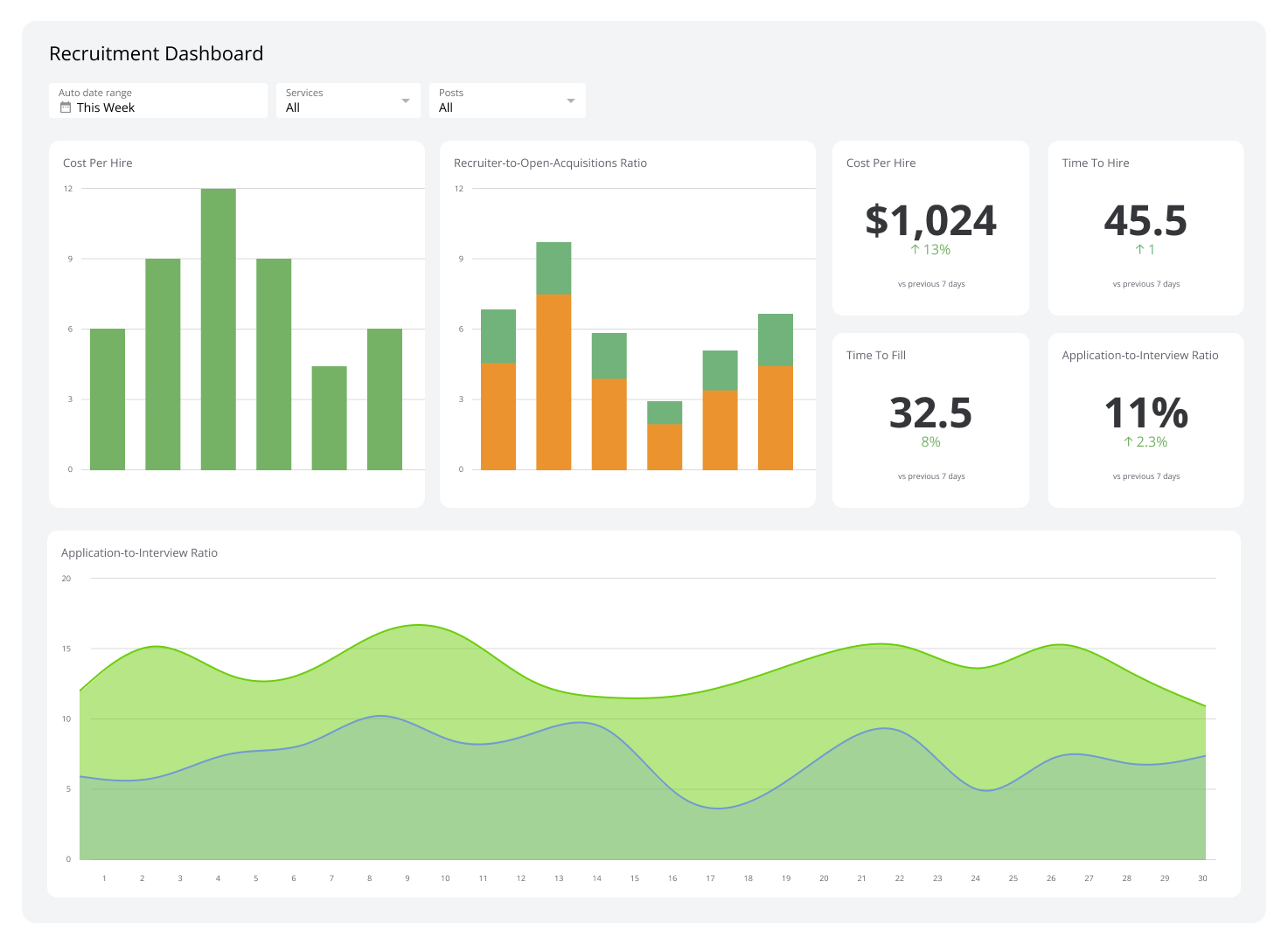
Recruitment Dashboard
Track pipeline, time-to-hire and cost-per-hire in one view.
What is a Recruitment Dashboard?
Recruitment dashboards pull data from job postings, applications, interviews, and offers to give you a real-time view of hiring. You can watch each stage, compare performance, and act sooner.
Clear metrics help you spot trends, like the steps where candidates drop off or which roles attract stronger applicants.
You can also forecast hiring needs from historical patterns and keep HR teams aligned with a transparent view of progress.
Examples of Recruitment Dashboards
Recruitment Overview Dashboard
A recruitment overview dashboard shows how efficient and effective your process is. It flags issues such as rising time-to-fill or declining candidate quality, and breaks out application volume and time-to-hire by stage.
Who’s it for | HR managers, talent acquisition teams, hiring managers, recruiters, senior management, reporting analysts, business analysts, team leaders, quality assurance teams |
How often it's needed | Real-time, daily, weekly, monthly |
Covered KPIs | Number of job applications received, number of positions filled, application completion rate, time-to-hire, cost-per-hire, source of hire, candidate quality rating, job offer acceptance rate, candidate pipeline stages, interview-to-hire ratio, diversity metrics, job advertisement performance, candidate experience scores, referral program performance, recruiter activity metrics, hiring manager satisfaction scores, internal mobility rates, talent pool growth, background check completion time, new hire retention rates, employee onboarding time, recruitment campaign effectiveness, job offer turnaround time, candidate feedback comments, rejection reasons, recruitment efficiency index |
Sourcing Dashboard
Sourcing dashboards surface low yields, diversity gaps, and other inefficiencies in your channels. The data shows when to shift or improve sourcing strategies and how each source affects candidate quality.
Who’s it for | Team leaders, HR managers, business analysts, recruiters, quality assurance teams, sourcing specialists, talent acquisition teams, reporting analysts, hiring managers |
How often it's needed | Real-time, daily, weekly, monthly |
Covered KPIs | Sourcing channel performance, number of applications per source, cost per source, candidate quality by source, time-to-fill by source, conversion rate from source, source effectiveness ratio, candidate engagement by source, referral source effectiveness, diversity of candidates by source, source of hire by role, candidate drop-off rate by source, social media recruiting metrics, job board performance, source lead-to-hire ratio, pipeline contribution by source, candidate experience by source, offer acceptance rate by source, sourcing campaign ROI, percentage of hires by source, hiring manager satisfaction by source, proactive sourcing interaction rate, candidate retention by source, application-to-interview ratio by source |
Offer Acceptance Rate Dashboard
An offer acceptance rate dashboard tracks how many job offers are made and accepted. Views by role, department, and hiring manager reveal where offer processes work and where they stall.
You can spot patterns, such as technical roles posting lower acceptance rates than marketing. That often points to concerns with compensation or benefits for those roles.
Who’s it for | Recruitment coordinators, business analysts, talent acquisition teams, reporting analysts, HR managers, hiring managers, team leaders, department heads, recruiters |
How often it's needed | Real-time, daily, weekly, monthly |
Covered KPIs | Job offer acceptance rate, offer decline reasons, time-to-acceptance, acceptance rates by position, acceptance rates by department, candidate satisfaction with offer process, compensation package effectiveness, competitive offer analysis, acceptance rate by recruiter, offer negotiations rate, impact of company brand on acceptance, candidate feedback on offers, cost per accepted offer, effectiveness of signing bonuses, acceptance rate by candidate source, geographic acceptance trends, offer rescind rate |
Recruitment Funnel Dashboard
A recruitment funnel dashboard shows progression by stage, including offer and acceptance rates. It highlights conversion and drop-off points so you can see where candidates are lost.
It also reveals bottlenecks, such as gaps between interview rounds or slow communication. With that view, you can trim delays and improve the hiring experience.
Who’s it for | HR managers, reporting analysts, team leaders, recruiters, hiring managers, business analysts, talent acquisition teams, sourcing specialists, quality assurance teams |
How often it's needed | Real-time, daily, weekly, monthly |
Covered KPIs | Number of applicants, applications received per vacancy, screening rate, interview rate, offer rate, acceptance rate, hire rate, time-to-hire, time-to-fill, candidate drop-off rate, cost-per-hire, quality-of-hire, sourcing channel performance, candidate experience scores, referral rate, applicant conversion rate, job posting effectiveness, pipeline efficiency, interview-to-offer ratio, offer-to-acceptance ratio, demographic metrics, diversity metrics, application completion rate, rejection reasons, applicant source breakdown |
Recruitment Team Performance Dashboard
Recruitment team performance dashboards track productivity and outcomes across the team. Common metrics include applicants screened, interviews arranged, offers extended, time-to-hire, and recruiter performance.
You also get job fill rates and activity views that surface strengths and improvement areas.
Who’s it for | HR managers, business analysts, team leaders, recruiters, quality assurance teams, talent acquisition teams, reporting analysts, hiring managers, sourcing specialists |
How often it's needed | Real-time, daily, weekly, monthly |
Covered KPIs | Number of applicants screened, interviews arranged, offers extended, offers accepted, hires made, time-to-hire, time-to-fill, applicant-to-hire ratio, source-of-hire effectiveness, candidate experience scores, recruiter productivity, cost-per-hire, quality-of-hire, passive candidate conversion rate, recruitment funnel efficiency, candidate feedback comments, job match quality, interview-to-offer ratio, offer-to-acceptance ratio, pipeline velocity, recruiter training completion rates, recruitment marketing effectiveness, diversity hiring metrics, candidate rejection reasons, external vs. internal recruitment success, top recruiter performance, teamwork efficiency, onboarding success rates, recruitment team performance index |
Individual Recruitment Performance Dashboard
An individual recruitment performance dashboard evaluates each recruiter’s ability to source and hire. Metrics such as time-to-hire and candidate satisfaction expose underperformance and highlight conversion from first contact to hire.
Who’s it for | Hiring managers, recruiters, sourcing specialists, team leaders, HR managers, talent acquisition teams, reporting analysts, quality assurance teams, business analysts |
How often it's needed | Real-time, daily, weekly, monthly |
Covered KPIs | Number of applicants screened, interviews arranged, offers extended, offers accepted, hires made, time-to-hire, time-to-fill, applicant-to-hire ratio, source-of-hire effectiveness, candidate experience scores, recruiter productivity, cost-per-hire, quality-of-hire, passive candidate conversion rate, recruitment funnel efficiency, candidate feedback comments, job match quality, interview-to-offer ratio, offer-to-acceptance ratio, pipeline velocity, recruiter training completion rates, recruitment marketing effectiveness, diversity hiring metrics, candidate rejection reasons, external vs. internal recruitment success, top recruiter performance, teamwork efficiency, onboarding success rates |
Open Position and New Roles Dashboard
Open position and new roles dashboards show the status and progress of every opening. You see open counts, application trends, and where each role sits in the process so you can spot hard-to-fill positions and timeline gaps.
Who’s it for | Recruiters, hiring managers, talent acquisition teams, HR managers, business analysts, reporting analysts, team leaders, recruitment coordinators, department heads |
How often it's needed | Real-time, daily, weekly, monthly |
Covered KPIs | Number of open positions, time-to-fill open roles, candidate pipeline status, job requisition aging, applicant volume per role, offer acceptance rates, recruitment advertising effectiveness, internal vs. external hire ratios, diversity of candidate pool, detailed role descriptions status, interview scheduling efficiency, candidate feedback scores, sourcing channel effectiveness, time-to-post jobs, recruitment communication timelines, onboarding progress for new roles, alignment of hires with business objectives, role-specific vacancy trends, urgency of role fulfillment, impact of employer branding on candidate attraction, recruitment budget allocations, overall job market competitiveness analysis |
Applicant Tracking Dashboard
Applicant tracking dashboards organize your pipeline and stage movement. Metrics show application counts, screening progress, interview steps, and outcomes, revealing where candidates drop off or where delays occur.
Who’s it for | HR managers, talent acquisition teams, team leaders, business analysts, recruitment coordinators, reporting analysts, recruiters, department heads, hiring managers |
How often it's needed | Real-time, daily, weekly, monthly |
Covered KPIs | Number of applications received, application-to-interview ratio, interview-to-offer ratio, time-to-hire, candidate pipeline status, offer acceptance rate, applicant source effectiveness, candidate experience scores, job offer decline reasons, recruitment advertising ROI, internal vs. external hire statistics, application completion rate, requisition fulfillment time, recruitment workflow efficiency, candidate feedback ratings, diversity of applicant pool, hiring manager satisfaction rate, interview scheduling efficiency, background check completion time, onboarding initiation speed, recruitment process compliance, candidate dropout rate, referral program effectiveness, ATS usage metrics, role-specific applicant trends |
Onboarding Dashboard
An onboarding dashboard shows how new hires progress in the first months. It tracks training completion and early satisfaction so you can step in sooner if a new hire is struggling.
Who’s it for | HR managers, recruitment coordinators, training coordinators, department heads, team leaders, employee engagement specialists, reporting analysts, onboarding specialists, senior management |
How often it's needed | Real-time, daily, weekly, monthly |
Covered KPIs | Onboarding completion rate, time-to-productivity, training completion rates, new hire retention rate, onboarding satisfaction score, new hire engagement level, time-to-full-compliance, onboarding program effectiveness, feedback from new hires, mentor participation rate, time spent on orientation, document submission rates, onboarding cost per hire, new hire support requests, technical resource allocation time, new hire performance metrics, probation period completion rate, onboarding feedback survey scores, early attrition rate, job readiness of new hires, adherence to onboarding schedule, new hire socialization rate, new hire survey participation, training module completion time, new hire goal achievement rate |
Cost-Per-Hire Dashboard
Cost-per-hire dashboards give you a clear view of spend across the hiring process. You can break down advertising, agency, travel, referral, and onboarding costs by stage and source.
Who’s it for | Recruiters, department heads, hiring managers, business analysts, HR managers, talent acquisition teams, team leaders, recruitment coordinators, reporting analysts |
How often it's needed | Real-time, daily, weekly, monthly |
Covered KPIs | Total recruitment cost, cost per applicant, cost per interview, cost per offer, internal recruitment costs, external recruitment costs, advertising costs, agency fees, onboarding costs, training costs, referral bonus expenses, job posting expenses, cost reduction achieved, budget vs. actual spend, recruitment ROI, time-to-fill correlation with cost, sourcing channel cost-effectiveness, internal vs. external sourcing costs, candidate assessment costs, technology and platform subscription costs, cost per hire by department, cost per hire by role, cost per hire over time, overall cost-efficiency index |
Candidate Diversity Dashboard
A candidate diversity dashboard shows diversity metrics such as race, gender, age, and academic background across your funnel. Use these insights to find and address gaps so teams become more representative and effective.
Who’s it for | HR managers, recruiters, hiring managers, talent acquisition teams, department heads, business analysts, team leaders, reporting analysts, recruitment coordinators |
How often it's needed | Real-time, daily, weekly, monthly, yearly |
Covered KPIs | Representation of gender, ethnicity, age, disability status, and veteran status among candidates, diversity hiring rate, diversity sourcing channel effectiveness, diversity at different recruitment stages, bias detection in recruitment process, diversity benchmark comparisons, diversity hire ratio by department, diversity hire ratio by role, time-to-hire diversity impact, training program participation rates on diversity, diverse candidate feedback, impact of diversity initiatives on recruitment, diversity campaign effectiveness, applicant drop-off rate by demographic |
Employee Referral Dashboard
An employee referral dashboard measures how well your referral program brings in talent. It tracks referrals submitted, hired, and who refers most frequently, then ties those hires to cost and quality.
You can see whether referrals reduce cost-per-hire and lift quality, and which teams source the strongest candidates.
Who’s it for | Business analysts, talent acquisition teams, HR managers, recruiters, department heads, reporting analysts, recruitment coordinators, hiring managers, team leaders |
How often it's needed | Real-time, daily, weekly, monthly |
Covered KPIs | Referral hire rate, time-to-fill for referred candidates, retention rate of referred hires, success rate of referred candidates, employee participation in referral program, cost per referral hire, referral incentive effectiveness, quality of hire from referrals, referral source analysis, referral program satisfaction, geographic referral trends, referred candidates' performance, referral-to-hire conversion rate, diversity of referred candidates, employee feedback on referral process, new hire retention from referrals, impact of referral campaigns, referral bonus payout rates, referred candidates' onboarding experience, referral effectiveness by department, overall referral program impact |
Gender Balance Dashboard
Gender balance dashboards measure your company’s gender ratio by department, leadership level, and role. This makes it easier to spot overrepresentation and guide fairer hiring and development plans.
Who’s it for | Talent acquisition teams, department heads, HR managers, recruiters, reporting analysts, recruitment coordinators, hiring managers, business analysts, team leaders |
How often it's needed | Real-time, daily, weekly, monthly |
Covered KPIs | Applicant gender ratio, gender ratio at each stage of recruitment, offer acceptance rate by gender, time-to-hire by gender, retention rate of hires by gender, gender diversity in sourced candidates, success rate of gender-focused recruitment campaigns, gender pay gap analysis, percentage of leadership roles held by each gender, gender ratio by department, gender ratio in referral hires, feedback on gender-focused initiatives, employee satisfaction by gender, promotion rate by gender, turnover rate by gender, training and development participation by gender, diversity and inclusion program effectiveness, overall gender balance index |
Hiring Velocity Dashboard
A hiring velocity dashboard breaks down how quickly recruiters fill roles. Metrics include time-to-hire, open roles filled per month, and average time spent at each stage.
This view helps you catch drawn-out interviews or slow decisions that cause candidate loss. You can also see seasonal patterns and adjust plans to win peak-season talent.
Who’s it for | Recruitment coordinators, HR managers, business analysts, team leaders, reporting analysts, department heads, recruiters, talent acquisition teams, hiring managers |
How often it's needed | Real-time, daily, weekly, monthly |
Covered KPIs | Time-to-hire, time-to-fill, average screening time, average interview time, offer acceptance rate, candidate pipeline velocity, applicant processing time, recruitment funnel metrics, source of hire efficiency, candidate drop-off rates, interview-to-offer ratio, application-to-interview ratio, hire impact on team performance, recruitment campaign efficiency, candidate feedback scores, recruiter efficiency metrics, job vacancy duration, onboarding time by department, job offer issuance rate, candidate engagement during hiring, cost per hire, hiring process compliance, candidate experience ratings, impact of recruitment technology, recruiter workload balance |
Salary Comparison Dashboard
A salary comparison dashboard shows how your pay ranges stack up against market data so you can set fair, competitive compensation.
It can reveal where certain roles are underpaid or where spend is high for the value delivered.
With that context, you can adjust pay decisions to improve retention and offer acceptance.
Who’s it for | Finance teams, department heads, HR managers, reporting analysts, senior management, team leaders, hiring managers, recruitment coordinators, business analysts |
How often it's needed | Real-time, daily, weekly, monthly, yearly |
Covered KPIs | Average salary by role, salary range by position, salary vs. industry average, geographical salary comparison, gender pay gap analysis, pay equity metrics, salary distribution by department, compensation package effectiveness, bonus and incentive structure, cost of living adjustments, salary progression over time, employee satisfaction with compensation, retention rates based on salary competitiveness, impact of salary changes on recruitment, job offer acceptance rate, market salary trends, internal salary alignment, payroll budget utilization, cost per hire, salary negotiation success rate, salary-related turnover rate |
Job Offer Dashboard
Job offer dashboards track offers accepted, declined, or pending. You can spot trends such as hard-to-fill roles or offers that are priced too low, and see decision time by role.
Who’s it for | HR managers, recruitment coordinators, business analysts, senior management, finance teams, department heads, hiring managers, team leaders, reporting analysts |
How often it's needed | Real-time, daily, weekly, monthly |
Covered KPIs | Job offer acceptance rate, job offer decline rate, time to fill, time to hire, cost per hire, offer acceptance by role, offer decline reasons, offer approval process time, candidate feedback on offer process, recruitment funnel metrics, candidate experience score, onboarding success rate, impact of salary on offer acceptance, impact of benefits on offer acceptance, offer negotiation success rates, diversity of hires, candidate retention post-offer, acceptance rate by recruitment channel, conversion rate from interview to offer, speed of offer generation, candidate satisfaction with offer process, competitive offer analysis, efficiency of offer approval workflows |
Interview Scheduling Dashboard
An interview scheduling dashboard keeps interviews, rooms, and interviewer availability in one place so you can avoid conflicts and book faster.
You can track time to schedule by role to find bottlenecks, such as slow responses or too many interview rounds.
Who’s it for | Technical interviewers, department heads, administrative assistants, senior management, recruitment coordinators, team leaders, HR managers, hiring managers, reporting analysts, business analysts |
How often it's needed | Real-time, daily, weekly, monthly |
Covered KPIs | Number of scheduled interviews, interview cancellation rate, interview rescheduling rate, time from application to interview, interviewer availability metrics, candidate no-show rate, time spent on scheduling, candidate satisfaction with the scheduling process, interviewer feedback on scheduling efficiency, use of scheduling automation tools, interview panel diversity, impact of scheduling on candidate experience, reminders' effectiveness rate, alignment with candidate preferences, interview slot utilization rates, scheduling process completion time, internal communication efficiency, interview-to-offer conversion rate, response time to scheduling requests, scheduling conflict resolution rate, candidate feedback on interview process |
Make recruitment data easy
Recruitment dashboards bring your hiring data together so you can monitor every step, act on trends, and improve outcomes.
Klips dashboards keep your recruiting metrics front and center. Start a free Klips trial.
Related Dashboards
View all dashboards